How Job Creation, Local Economic Partnerships, and Community Engagement Can Lead to Lasting Positive Impact
As demand for cloud computing, artificial intelligence, and digital infrastructure continues to accelerate, communities across the country are asking an increasingly important question: How can we trust that data center development is being done responsibly?
Within these communities, conversations often focus on concern and uncertainty centered around new infrastructure impacting traffic, utilities, the environment, and local land use. Communities want to protect what they have and what they’ve built; it’s the hallmark of strong, thriving communities.
However, there’s an equally important, and often overlooked, question: How can these projects actually strengthen and contribute to the communities in which they’re built?
There are many exciting and even surprising ways in which data centers are positively contributing to the wellbeing of the communities they’re a part of; and of that list, workforce development is one of the strongest long-term measures of community impact.
Community Engagement Starts Long Before Construction Begins
Responsible development requires listening before building. It is imperative that teams begin understanding the communities that they’re joining, listening to their beliefs and concerns, and truly hearing their constituents before a single shovel ever breaks ground. This mentality must become a standard from day one. Thoughtful community engagement should be ongoing, not a one-time public meeting.
Strong projects evolve through collaboration with residents, educators, businesses, nonprofits, and local government. In Frederick County, Maryland — where Rowan has our first hyperscale data centers — Rowan has committed to building relationships that last and making local economic partnerships mean something. We’ve made a concerted effort to include and welcome our community into our plans with multiple public open houses (2023, 2024, 2025), community meetings, direct conversations with community members, and leaning into our network of local employees working in Frederick County.
Research from the International Association for Public Participation (IAP2) has shown that early stakeholder engagement meaningfully improves project outcomes for all stakeholders, and that’s something that we take very seriously. We value listening to our community, even when we might not like the message. We trust that mutual understanding and collaboration will be found on the other side of honest communication.
Workforce Development Is One of the Most Meaningful Community Benefits
When people think about the impact of a new data center, they might picture cranes, construction equipment, and the buildings themselves. While construction creates significant economic activity, the long-term value of these projects extends well beyond the construction phase. There is a net positive economic impact of data centers on local communities because modern data centers rely on a highly skilled workforce to design, build, operate, secure, and maintain the digital infrastructure that powers everyday life.
That workforce includes engineers, electricians, HVAC technicians, mechanical specialists, IT professionals, cybersecurity experts, facility operations teams, supply chain professionals, maintenance personnel, and project managers. As demand for cloud computing, artificial intelligence, and digital services continues to grow, so too does the need for individuals with the technical skills to support this critical infrastructure. In fact, according to data from the Uptime Institute, 53% of facility operators report active difficulties finding qualified job candidates. That’s a lot of highly skilled jobs to fill, providing additional strengths for the economic impact of data centers on their home communities.
This growing demand presents an opportunity for communities that invest in workforce development. Partnerships with local schools, career and technical education programs, community colleges, workforce development organizations, and employers can help prepare students and workers for careers in fields that are expected to remain essential for decades to come, like data center jobs and other skill-based workforce needs.
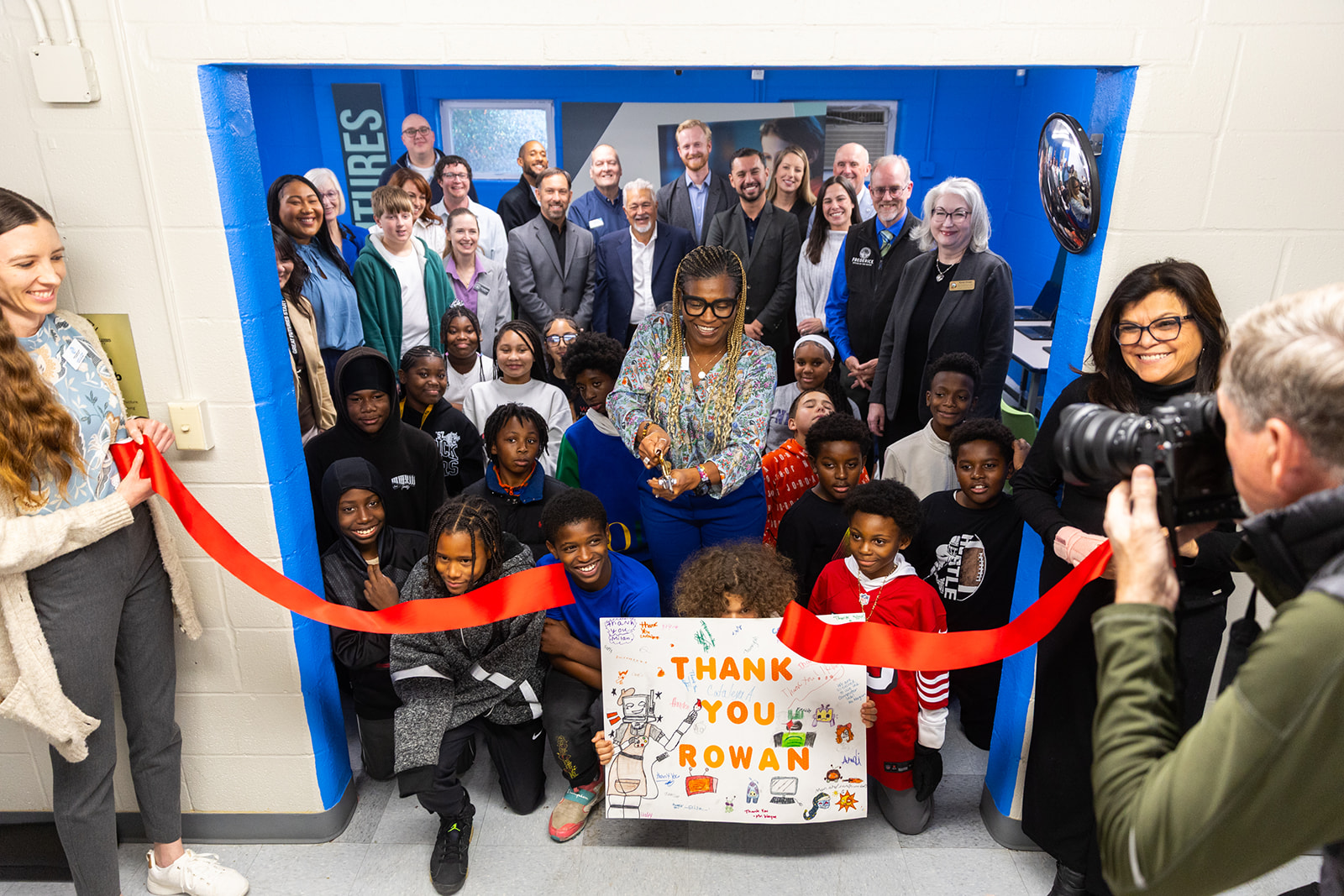
For Rowan, workforce development is one component of a broader commitment to community engagement. In Frederick County, we have invested in crucial initiatives that support STEM education in local elementary schools, technology labs, trades training at Frederick Community College, and other programs designed to expand access to data center jobs and career opportunities in technology. These efforts reflect the belief that responsible development should create real, lasting value, not only through the facilities themselves, but by helping local residents develop the skills needed to participate in a rapidly evolving economy.
When communities invest in workforce pipelines alongside infrastructure, the benefits of development can extend far beyond a single project, creating opportunities for current and future generations alike.
Community Impact Is Measured by Long-Term Investment in Local Partnerships
Meaningful community engagement in data center development must extend far beyond just listening. It requires commitment to sustained investment. Responsible data center development should leave a community stronger than it was before construction began, creating benefits that last well beyond the completion of a project.
In Frederick County, Rowan has focused on building local partnerships through initiatives that support education, workforce development, and community organizations. Recent investments through the Community Catalyst Program have provided nearly $250,000 to organizations including Habitat for Humanity, Tuscarora High School, the Ausherman Foundation, and other local nonprofits.
The impact extends well beyond individual programs. Independent economic analysis projects that Rowan’s Frederick County developments will ultimately generate approximately $2.5 billion in construction-related economic activity, support roughly 15,500 jobs statewide, create more than 330 permanent full-time positions, and contribute over $19 million annually in property tax revenue once operational. Combined with environmental initiatives, including pursuing BREEAM Excellent certification, and investing more than $25 million in traffic improvements, workforce development, and community initiatives, these efforts reflect a broader philosophy: responsible development should commit to creating lasting value for the communities it serves.
Building More Than Infrastructure
As digital infrastructure becomes increasingly essential, the success of a data center must be measured by more than its computing capacity. It should also be measured by the opportunities it creates, the partnerships it builds, and the trust it earns within the community.
Rowan believes the best way to judge our work isn’t by what we say. More importantly, it’s by what we’ve done and will continue to do. Through continued community engagement, workforce development, local partnerships, and responsible investment, our goal is to create infrastructure that supports not only the digital economy, but the long-term success of Frederick County and all the people who are proud to call it home.